

Sponsored by

👋 Hi, it’s Rohit Malhotra and welcome to the FREE edition of Partner Growth Newsletter, my weekly newsletter doing deep dives into the fastest-growing startups and S1 briefs. Subscribe to join readers who get Partner Growth delivered to their inbox every Wednesday morning.
One quick question: what best describes you? Tell me here. It takes 5 seconds and shapes which deals I break down next.
Latest posts
If you’re new, not yet a subscriber, or just plain missed it, here are some of our recent editions.
Partners

Slow billing doesn't just create friction — it delays cash and compounds across every deal you close.Slow billing doesn't just create friction — it delays cash and compounds across every deal you close.
Most SaaS finance teams assume the gap between contract signature and first invoice is a minor inconvenience. The Tabs Billing Lag Calculator puts a dollar figure on it.
Answer 5 quick questions about your contracts, invoicing process, error rate, and DSO, and the calculator benchmarks your billing lag against top SaaS companies — then shows you exactly what it's costing you.
Two minutes. One number that's hard to ignore.
Calculate your billing lag and see where you stand.

Get $200 for moving your paycheck to Chime 💸
Open a new Chime Checking Account and make a qualifying direct deposit of $500 or more within your first 30 days. That’s it. Sign-up takes a few minutes, and your next paycheck does the rest.
Interested in sponsoring these emails? See our partnership options here.
Subscribe to the Life Self Mastery podcast, which guides you on getting funding and allowing your business to grow rocketship.
Previous guests include Guy Kawasaki, Brad Feld, James Clear, Nick Huber, Shu Nyatta and 350+ incredible guests.
Introduction
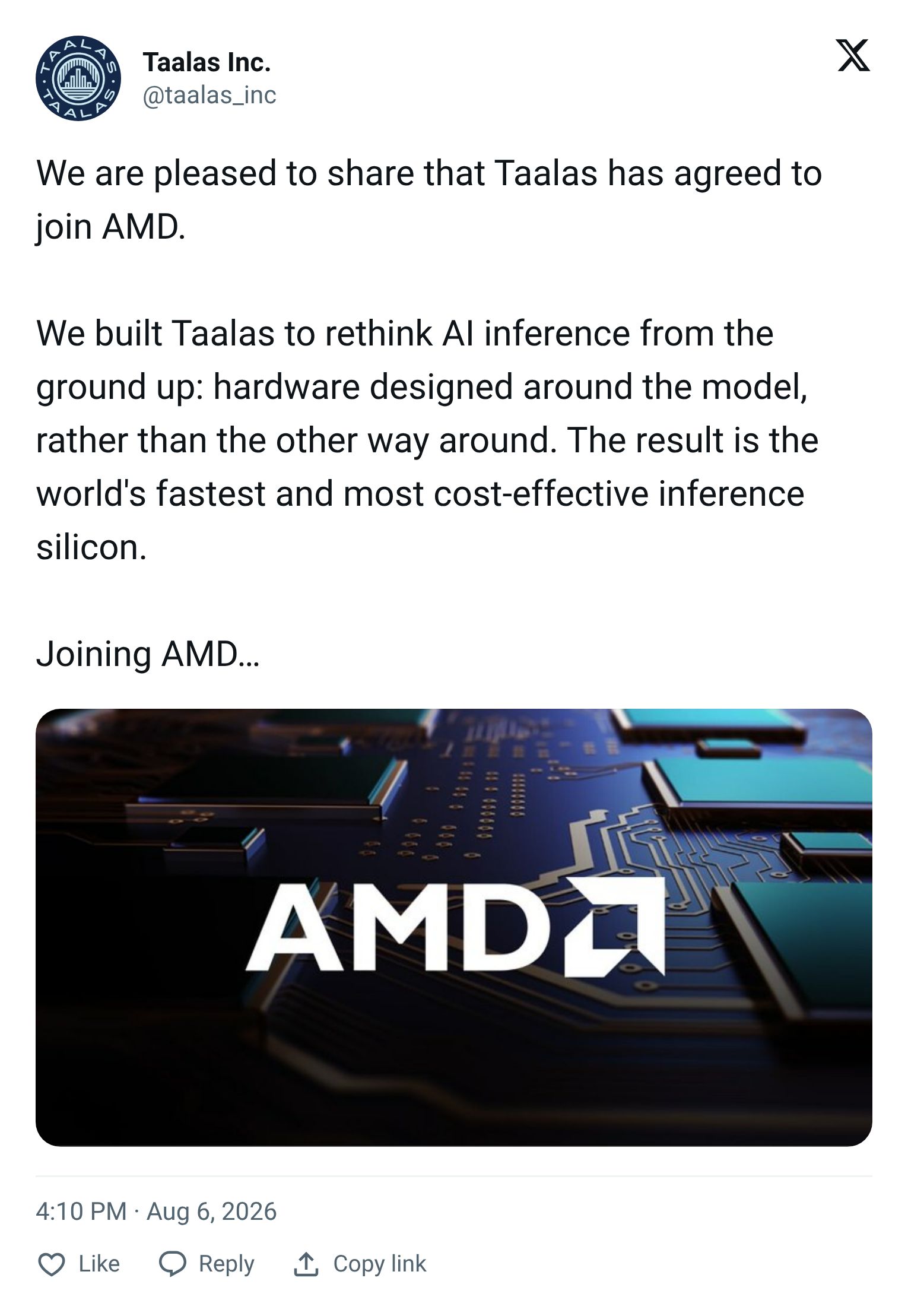
AMD buying Taalas is not an inference tuck-in. It is a GPU company buying a chip built on the premise that GPUs are the wrong tool for inference.
$2.9 billion in cash and stock. Up to $1.4 billion of it contingent. 13x the $219 million Taalas raised.
Look at how the price surfaced. AMD announced the deal in August without terms. Its November 3 earnings release named Taalas but gave no number. The figure only appeared in the quarterly filing a day later, with no word on what triggers the contingent half. Close is expected by the end of 2026.
Taalas is young, not unproven. Founded in 2023 by former AMD and Tenstorrent leaders. Its HC1 chip hardwires Llama 3.1 8B into silicon and runs nothing else. Early demos reportedly hit around 17,000 tokens per second per user.
AMD already sells Instinct GPUs into its Helios racks. Taalas becomes the specialist chip that sits beside them.
Setup
In 2023, three former AMD and Tenstorrent leaders started Taalas in Toronto with one narrow idea: stop running AI models on general-purpose chips and bake the weights straight into silicon. Three years later, AMD is paying $2.9 billion for it.
AMD isn’t buying the HC1 chip. It is buying a turnaround no GPU company can match. Taalas says it can turn a model it has never seen into custom hardware in roughly two months, against an industry norm of one to two years.
Taalas was priced as a stealth bet, not a scale business. It came out of stealth in 2024 with $50 million from Quiet Capital and Pierre Lamond, then raised $169 million earlier in 2026 from a group that included Fidelity. Neither round came with a public valuation.
Its chips are narrow on purpose. HC1 runs Llama 3.1 8B and nothing else. HC2 is designed for 20 billion parameter models. For now, each chip tops out at about 8 billion parameters.
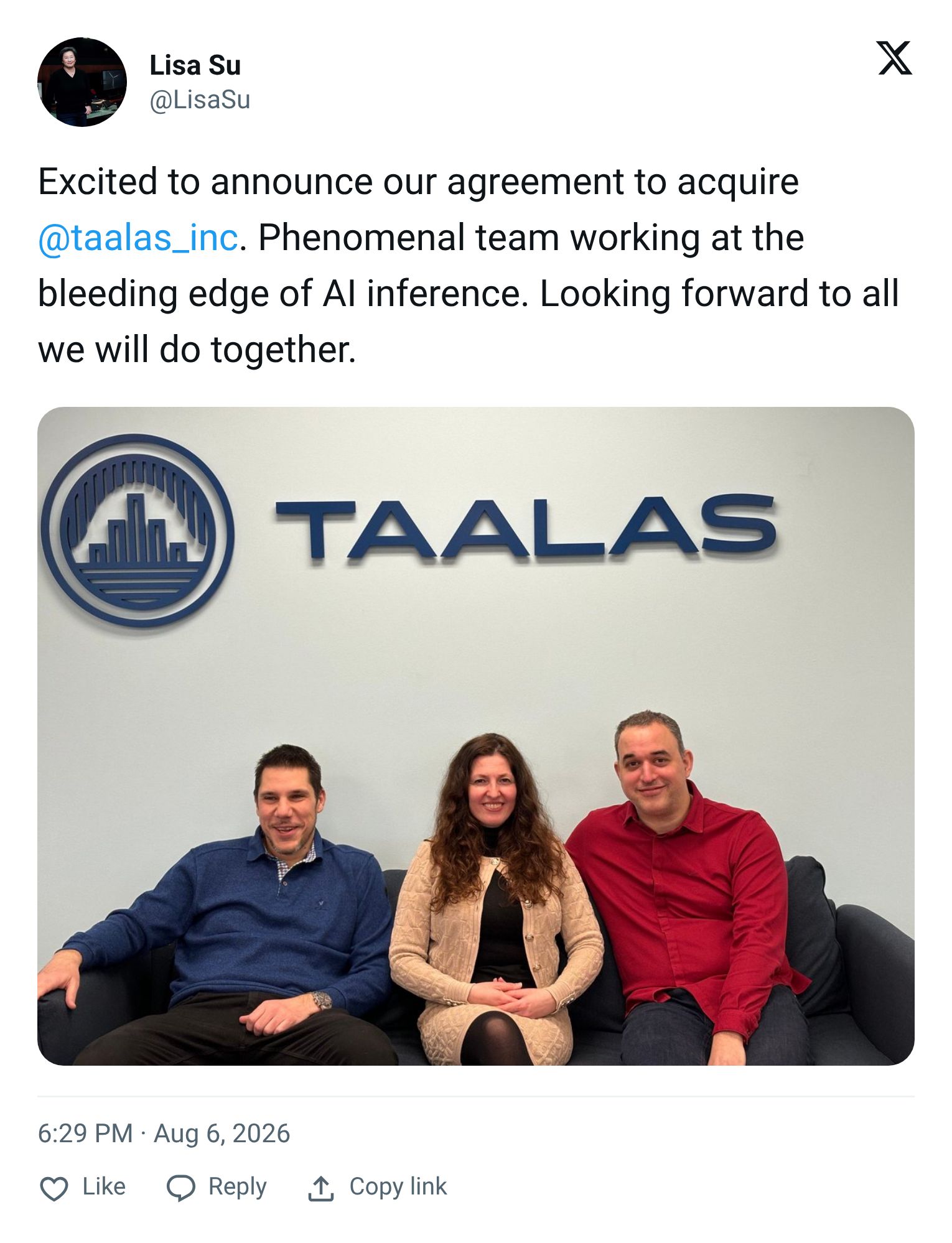
That is the asset AMD wants. It does not need another GPU. It needs inference silicon that sits beside Instinct in every Helios rack, running on ROCm. MK1 brought inference software. Taalas brings the chip.
The bid
AMD is paying about $2.9 billion in cash and stock for Taalas. The filing does not give the split between cash and stock. Taalas has disclosed no revenue, so there is no revenue multiple to run. This is a price for a capability, not a business.
The number that matters is the contingent share, not the headline. Up to $1.4 billion, nearly half the price, depends on conditions AMD has not spelled out. The guaranteed floor is closer to $1.5 billion.
Against capital raised, the math is cleaner. Taalas disclosed $219 million across two rounds. The headline price returns 13x that. The guaranteed portion alone returns about 7x, roughly three years after founding.
AMD can afford the structure. It ended Q3 with $15.8 billion in cash and short-term investments, and data center revenue grew 97% to $8.5 billion. It also has an $8.2 billion all-stock deal for World Labs pending.
AMD is not paying for traction. HC1 runs one 8 billion parameter model. AMD is paying for time: model to silicon in about two months instead of one to two years. Taalas is its fourth inference deal in a year. The contingent half reads like AMD’s hedge on whether that speed holds at larger model sizes.
The math
Three numbers do the explaining here.
One. AMD is paying 13x capital raised: $2.9 billion against total capital raised of $219 million. That sounds rich until you set it against the category. Nvidia's deal to license intellectual property from Groq cost $20 billion. Etched raised $700 million at a $21 billion valuation on August 18, 2026, while still having announced no revenue. AMD is buying a hardwired inference chip for about a seventh of either. Not a scarcity premium. A value buy.
Two. Scale is not the thesis. In February, Bajic said the firm has 24 employees and has spent US$30 million of the over US$200 million it has raised so far to develop its first product. Speed is the thesis. Taalas performs final customization on two metal layers, which is how it turns a model into a chip in about two months. The deal values that first $30 million of product spend at nearly 100x.
Three. Up to $1.4 billion is contingent. The guaranteed floor is about $1.5 billion, roughly 7x capital raised. AMD has locked in a seat in model-specific silicon for less than a tenth of what Etched's investors paid, and it only pays the rest if Taalas delivers.

The Structure
AMD and Taalas signed a definitive agreement in August 2026. At the time, AMD disclosed no price, no split between cash and stock, and no contingent terms. The deal's structure is defined as much by what AMD withheld as by what it later disclosed.
Because Taalas is privately held, the transaction requires no shareholder vote and no public premium to justify. AMD's November 3 earnings release referred to Taalas without stating a value. The figure of approximately $2.9 billion first appeared in its quarterly filing on November 4. That filing still omits the cash and stock allocation and the conditions attached to up to $1.4 billion in contingent consideration.
The transaction is AMD's fourth inference-focused acquisition since November 2025, following inference software company MK1. A separate $8.2 billion all-stock acquisition of World Labs also remains pending. The sequence points to a deliberate move from inference software to inference silicon.
The full Taalas team will join AMD's AI organization and remain in Toronto, which makes this a full acquisition rather than an acquihire. Closing is expected by the end of 2026, subject to customary conditions and regulatory approvals. AMD's stated commitment to retaining Canadian talent is likely to weigh with Canadian regulators.

Operator case
The Taalas transaction offers three lessons that extend well beyond semiconductors.
First, narrow products can command strategic prices when they fit an acquirer's platform. Taalas built a chip that runs a single model. On its own, that is a constraint. Placed alongside Instinct GPUs in AMD's Helios racks, it becomes a differentiated capability AMD could not develop as quickly internally. Founders should judge their product less by its breadth than by how precisely it fills a gap in a larger company's roadmap.
Second, capital efficiency strengthens a company's negotiating position. By February 2026, Taalas had spent approximately $30 million of the $219 million it raised to build its first product, with 24 employees. A company that proves its core thesis on a modest budget gives an acquirer a credible basis for paying for future potential rather than current revenue.
Third, contingent consideration is a tool for bridging valuation gaps. Up to $1.4 billion of the price depends on undisclosed conditions. This structure lets an acquirer pay a headline price while protecting itself against execution risk. Founders entering negotiations should be prepared to accept part of their value in milestones, and should insist that those milestones are within the team's control.
The Bet
AMD is wagering on four things being true at once.
One. Inference splits into two markets. General GPUs serve the models that keep changing. Hardwired chips serve the models that don't. AMD is betting the high-volume, fixed workloads move to specialized silicon, and that owning both chips in one Helios rack matters more than winning a GPU benchmark.
Two. Speed beats scale. Taalas tops out at about 8 billion parameters per chip today, and HC2 targets 20 billion. Etched raised at $21 billion. Nvidia paid $20 billion for Groq's IP. AMD is betting a two-month turnaround from model to silicon outruns the parameter ceiling, and that 13x capital raised for a working chip beats a $21 billion private mark for a promise.
Three. Models stay still long enough. A hardwired chip is only worth something while its model stays in production. The bet is that enterprises standardize on open models like Llama for high-volume work, long enough to pay back the silicon before the next release makes it obsolete.
Four. The contingent half gets earned. Up to $1.4 billion depends on conditions AMD has not disclosed. AMD is betting the Toronto team stays, ships HC2 and hits whatever milestones the money is tied to. Taalas is not the end of the run. It is the silicon half of the inference stack.

Who Loses
Three groups lose, and they lose in different ways.
Independent inference chip startups lose the cleanest. Etched raised at $21 billion in August, with no announced revenue and Jane Street its only named customer. Fractile, Positron, MatX and SambaNova are raising on similar logic. AMD has just priced a working, model-specific chip at $2.9 billion, with $1.4 billion of that contingent. That is now the comparable every acquirer will cite. The pool of strategic buyers also shrinks by one. AMD already has its specialist.
Nvidia loses the narrative, not the market. Its pitch is one general architecture for training and inference. AMD can now sell a Helios rack that pairs Instinct GPUs with hardwired silicon for fixed workloads. Nvidia has the Groq IP for $20 billion, so it is not exposed. But AMD's version of the same hedge cost a seventh of the price.
GPU-only inference clouds lose on cost per token. Running a fixed open model like Llama on general GPUs is the expensive way to serve a workload that never changes. If Taalas's speed holds at scale, any provider without specialized silicon competes on price against a rack that does.
Bigger Signal
Three threads worth pulling.
One. GPU makers are buying the chips that argue against their own architecture. Nvidia paid $20 billion for Groq's IP in December 2025. AMD is paying $2.9 billion for Taalas, inside a pending deal run with World Labs that totals $11.1 billion. The signal is not inference. It is that GPU vendors would rather own specialization than let an independent prove it against them. Watch whether Intel, Broadcom or Qualcomm start buying inference startups instead of building.
Two. Strategic prices and private marks are splitting. Etched raised at $21 billion with no announced revenue. A strategic buyer priced a working, model-specific chip at $2.9 billion, with $1.4 billion contingent. The private market prices momentum. The buyer prices silicon that runs. Watch which inference startups with high marks start taking calls, and whether contingent payouts become the standard way to close the gap.
Three. Inference is becoming a rack, not a chip. AMD will fold Taalas into Helios systems with ROCm. Etched now describes its product as a full rack-scale inference system. The unit of competition is moving from the chip to the system, with GPUs and specialized silicon in the same rack. Watch whether Nvidia ships Groq-based silicon inside its own racks in response.

Closing thoughts
The bull case. AMD bought a working model-specific chip and a team that turns a model into silicon in about two months. The price was $2.9 billion, 13x capital raised and about a seventh of what Groq and Etched commanded, with $1.4 billion held back until Taalas delivers. Fold Taalas into Helios and AMD sells GPUs and specialized silicon in the same rack.
The bear case. Each chip tops out at about 8 billion parameters, while frontier models are far larger and change every few months. A hardwired chip ages with the model it runs. AMD is also integrating four inference deals while World Labs is still pending. If enterprises keep chasing the newest model, $2.9 billion buys a demo, not a product line.
What to watch: close by the end of 2026, then HC2 at 20 billion parameters and the first Helios rack shipped with Taalas silicon. If HC2 ships on time, the price was cheap. If the contingent half goes unpaid, the market will know why.
Here is my interview with Sevan Marian who co-founded Fleet in 2019 with €2,500, without raising investment or taking on debt. Today, Fleet serves over 2,000 customers and delivers to more than 150 countries.
If you enjoyed our analysis, we’d very much appreciate you sharing with a friend.
Tweets of the week
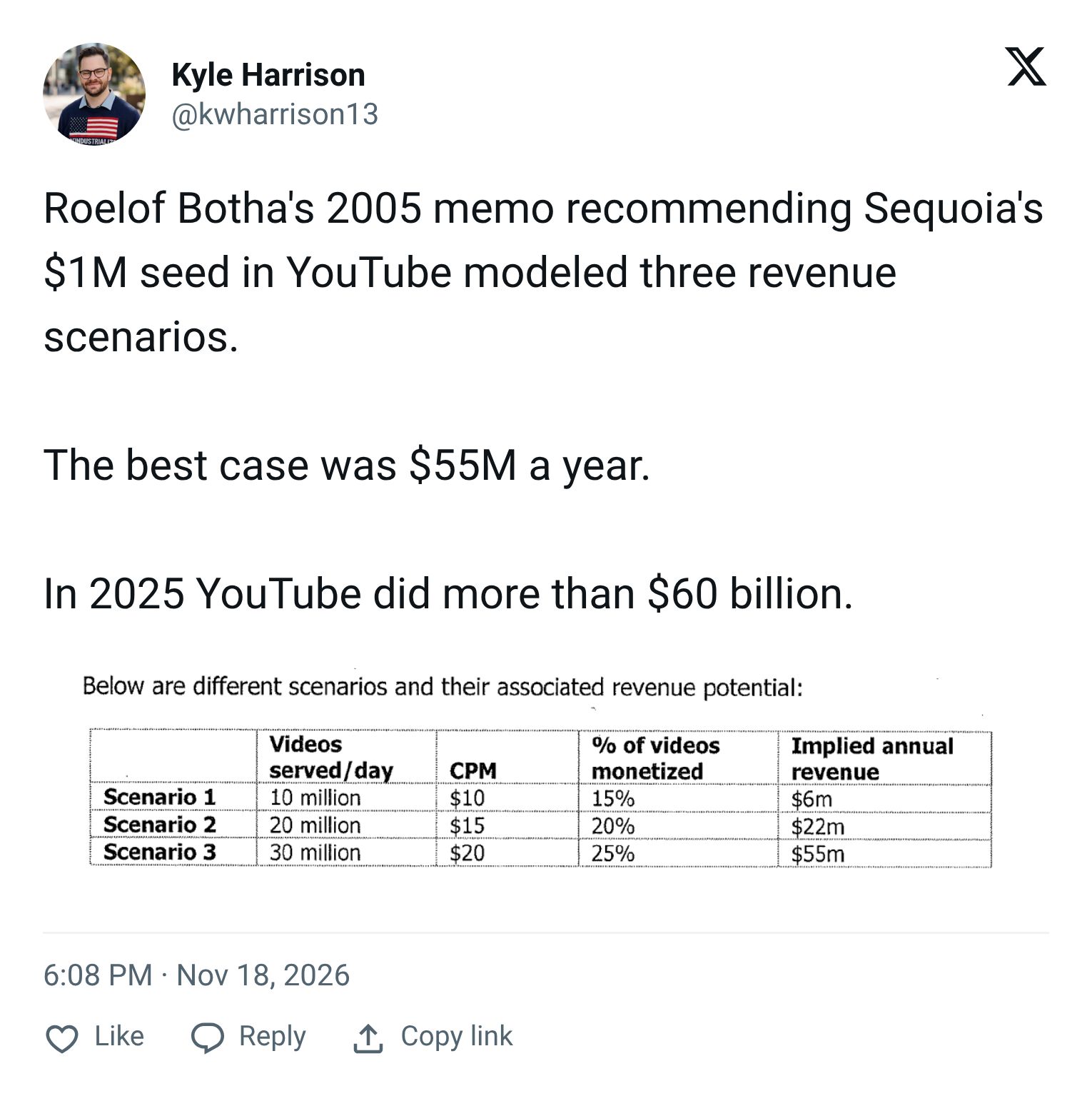
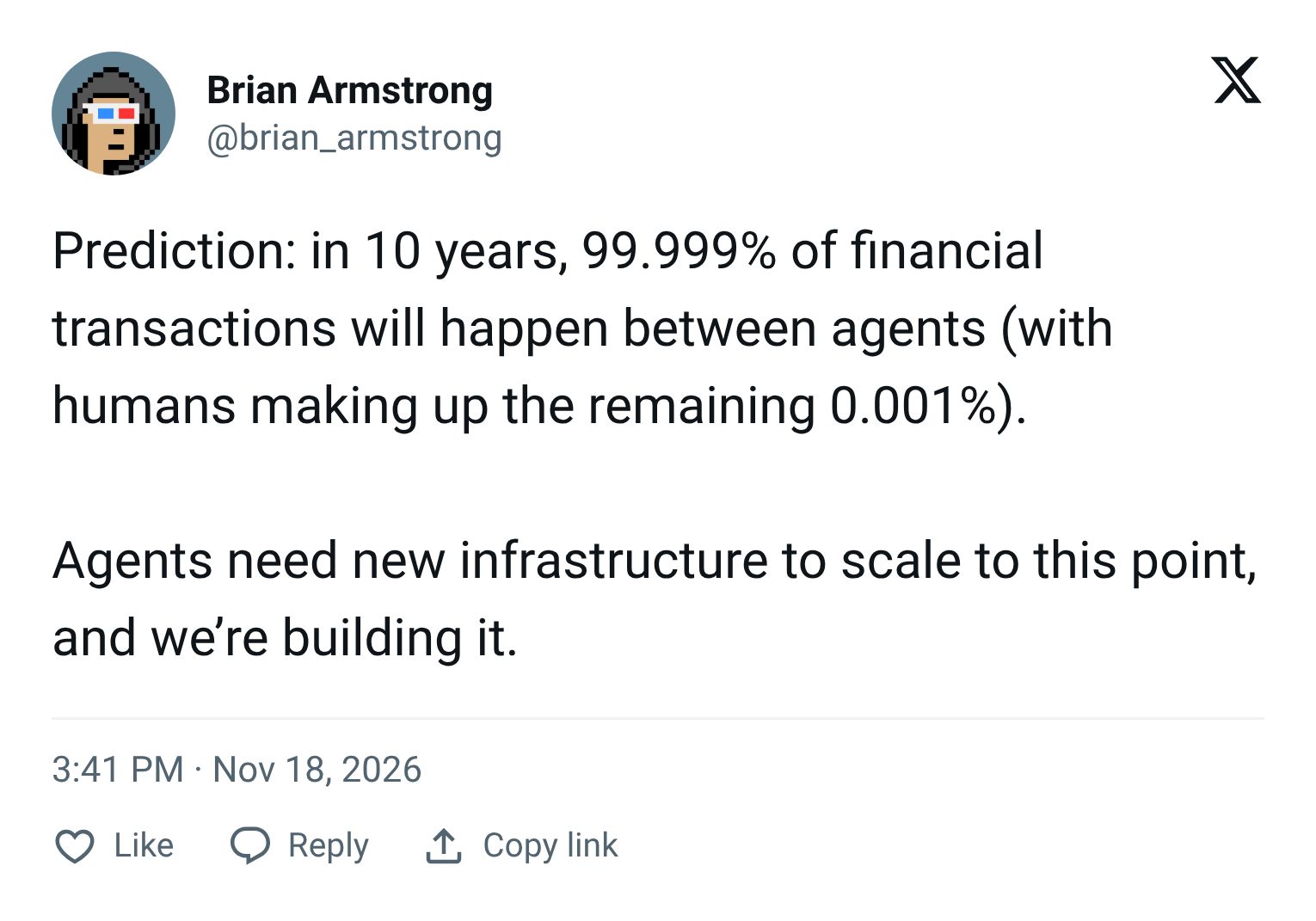
Here are the options I have for us to work together. If any of them are interesting to you - hit me up!
Sponsor this newsletter: Reach thousands of tech leaders
Upgrade your subscription: Read subscriber-only posts and get access to our community
Buy my NEW course: Buy my course on outbound sales
And that’s it from me. See you next week.

