

In partnership with

👋 Hi, it’s Rohit Malhotra and welcome to the FREE edition of Partner Growth Newsletter, my weekly newsletter doing deep dives into the fastest-growing startups and S1 briefs. Subscribe to join readers who get Partner Growth delivered to their inbox every Wednesday morning.
One quick question: what best describes you? Tell me here. It takes 5 seconds and shapes which deals I break down next.
Latest posts
If you’re new, not yet a subscriber, or just plain missed it, here are some of our recent editions.
Partners
Sales Owns Retention, Not Just Closed Deals

Pebl’s Chief Business Officer, Dutta Satadip, joins The GTM Garage to show how Pebl merged Operations and GTM under one leader, and how it aligned goals and incentives across the customer lifecycle.
You’ll also see how Pebl uses AI across that lifecycle and the stack behind prospecting, pipeline, and handoff to onboarding.
15 min conversation. 15 min open Q&A. For Seed to Series A teams.

Get $200 for moving your paycheck to Chime 💸
Open a new Chime Checking Account and make a qualifying direct deposit of $500 or more within your first 30 days. That’s it. Sign-up takes a few minutes, and your next paycheck does the rest.
Interested in sponsoring these emails? See our partnership options here.
Subscribe to the Life Self Mastery podcast, which guides you on getting funding and allowing your business to grow rocketship.
Previous guests include Guy Kawasaki, Brad Feld, James Clear, Nick Huber, Shu Nyatta and 350+ incredible guests.
Introduction
Salesforce buying Cresta is not a voice AI tuck-in. It is a seat-based software company buying the agent that will replace its seats.
A reported $2.7 billion. 27x Cresta’s $100 million ARR. A 69% step-up on the $1.6 billion valuation Tiger Global set in March 2022.
Look at the gap between the two marks. In October, secondary estimates priced Cresta between $0.6 billion and $1.1 billion. Weeks later, Salesforce paid up to 4.5x that. Salesforce did not disclose terms, and close is expected between February and April 2027.
Cresta was overlooked, not stalled. Nine years of enterprise deployments. 600+ employees. Voice agents already live inside Marriott, Comcast and Alaska Airlines call centers. The private market priced all of it as a 2022 unicorn.
Salesforce already owns Fin, its $3.6 billion text-first service agent. Cresta becomes the voice half of Agentforce, wired directly into Service Cloud.

Setup
In 2017, Cresta came out of Stanford’s AI Lab with one narrow idea: listen to customer calls and tell the human rep what to say next. Nine years later, Salesforce is paying a reported $2.7 billion for it.
The buy is not the coaching software. It is the live call path no CRM company can build fast: voice agents already resolving complex calls end to end for Marriott, Comcast, Alaska Airlines, United Airlines and Cox Communications, ready to plug into the customer record.
Cresta was priced as a 2022 unicorn the market had stopped believing in. Tiger Global led its $80 million Series C at $1.6 billion in March 2022. The $125 million Series D in November 2024 never publicly reset that number. By October 2026, secondary estimates had slipped to between $0.6 billion and $1.1 billion.
What kept compounding is real. In the two years before the Series D, ARR nearly quadrupled and the customer base doubled. By April 2026, ARR crossed $100 million. Headcount moved past 600.
That is the asset Salesforce wants. It does not need another dashboard. It needs agents that resolve work inside every channel Service Cloud touches. Fin brought chat. Braze brought engagement. Cresta brings the phone.

The bid
Salesforce is paying a reported $2.7 billion for Cresta. Terms, structure and the cash versus stock split were not disclosed. Against $100 million in ARR, that is 27x. Not a contact center multiple. The multiple of a scarce asset in a category consolidating fast.
The number that matters is the step-up, not the price. Cresta’s last disclosed valuation was $1.6 billion, set by Tiger Global in March 2022. The $125 million Series D in 2024 never publicly moved it. In October 2026, secondary estimates sat between $0.6 billion and $1.1 billion. Salesforce paid 69% above the last primary mark and up to 4.5x the secondary one.
Against capital raised, the math is cleaner. Cresta raised roughly $276 million across five rounds. The exit returns 9.8x that across the cap table.
Salesforce is not paying for growth. Sierra, founded six years after Cresta, reached $150 million ARR by February 2026. Salesforce is paying for deployment: voice agents already live at Marriott, Comcast and Alaska Airlines scale, today. Fin cost $3.6 billion for chat. Cresta costs $2.7 billion for the phone. That is $6.3 billion for both halves of service.

The math
Three numbers do the explaining here.
One. Salesforce is paying roughly 27x ARR: a reported $2.7 billion against $100 million. That sounds rich until you set it against the category. Sierra raised at $15.8 billion in May 2026 on about $200 million in ARR, roughly 79x. NICE paid $955 million for Cognigy in 2025, about 26x trailing revenue. Salesforce is paying a Cognigy multiple for a business twice Cognigy’s size, and a third of Sierra’s private multiple. Not a scarcity premium. A value buy.
Two. Growth is not the thesis. Sierra went from about $26 million to $200 million in ARR in 17 months. Cresta took nine years to cross $100 million. Deployment is the thesis. Cresta’s voice agents already run at Marriott, Comcast and Alaska Airlines volume. The deal values Cresta at 9.8x the roughly $276 million it raised, and 69% above its 2022 mark.
Three. Fin cost $3.6 billion. Cresta costs a reported $2.7 billion. That is $6.3 billion for a text agent and a voice agent, about 40% of Sierra’s last private valuation. Salesforce bought both halves of service for less than half the price of the independent alternative.

The Structure
A definitive agreement. No price. No mix of cash and stock. No disclosed earnout or retention pool. The structure starts with what Salesforce chose not to say.
That silence is the point. Cresta is private, so there is no shareholder vote, no public premium to defend and no proxy to file. The reported $2.7 billion comes from The Information, not Salesforce. Salesforce controls the narrative and the numbers stay off its own page.
This is not a tuck-in. Fin was announced in June 2026 and closed in September. Braze was signed on October 20. Cresta was signed November 2 and is not expected to close until Q1 of fiscal 2028, February to April 2027. Three customer experience platforms in the integration queue at once. The sequencing is the strategy: text, engagement, then voice.
Cresta keeps its name and its CEO for now. Ping Wu frames the deal as Cresta realizing its vision at scale inside Service Cloud. The product survives. The roadmap changes owner.
The guardrails tell the rest. Customary closing conditions. Required regulatory approvals. And one commitment that carries real weight: after close, Cresta keeps supporting the contact center and telephony platforms its customers run today. That line keeps NICE, Genesys and Five9 customers from walking. It also sets the clock on how long they stay.
Operator case
From the operator’s seat, this is not a voice AI bet. It is a distribution bet.
Salesforce already has the hard part. Service Cloud sits inside the enterprises that run the largest contact centers in the world. The customer record, the case history and the workflow already live there. Distribution is solved. The leak is the phone.
The signal is in where calls happen. Voice runs on NICE, Genesys and Five9, outside Salesforce. The release itself admits customer conversations are trapped in silos, disconnected from the tools teams use to act. Salesforce owns the record. Someone else owns the call.
That is exactly the gap Cresta was built to close. It already sits on top of those CCaaS platforms, inside live calls, coaching reps and resolving issues end to end. AI Supervisor launched in early 2026. Voice agents are in production at Marriott, Comcast and Alaska Airlines. Salesforce is not buying a fix. It is buying a bridge that is already carrying traffic.
And the front end keeps working. In the two years before its 2024 Series D, Cresta nearly quadrupled ARR and doubled its customer base.
The arithmetic: $2.7 billion on $100 million is 27x. Sell Cresta into enough Service Cloud accounts to reach $200 million, and the effective multiple halves to 13.5x, before Salesforce reprices a single seat.

The Bet
Salesforce is wagering on four things being true at once.
One. Voice is where service gets decided. Fin covers chat. Cresta covers the call. Salesforce is betting the phone stays the channel customers pick when an issue is expensive or emotional, and that owning the agent on that call matters more than owning the dashboard after it.
Two. Deployment beats growth. Sierra went from about $26 million to $200 million in ARR in 17 months. Cresta took nine years to reach $100 million. Salesforce is betting enterprise buyers pay for agents already proven at Marriott, Comcast and Alaska Airlines volume, and that a 27x price for live deployments beats a 79x private mark for momentum.
Three. Neutrality holds long enough. Cresta runs on top of NICE, Genesys and Five9. The bet is that those customers stay through close in early 2027 and through integration, while Cresta’s data and roadmap move closer to Service Cloud.
Four. The agent replaces the seat before a rival does. Service Cloud is sold per seat, and every call an agent resolves erodes that model. Salesforce is betting it can reprice from seats to outcomes on its own terms. Cresta is not the end of the run. It is the second half of the hedge.
Who Loses
Sierra loses the cleanest. At $15.8 billion on about $200 million in ARR, it was the obvious independent alternative for enterprise voice and chat. Now it competes against a line item inside Salesforce’s largest accounts, sold by the company its co-founder Bret Taylor used to run. Its path narrows to non-Salesforce shops or the public markets.
NICE loses its best partner. It reached $362 million in AI ARR by June 2026 and paid $955 million for Cognigy to build its own agents. Cresta sat on top of NICE platforms. From November 2, that layer reports to a CRM vendor.
Genesys and Five9 lose leverage. Genesys invested in Cresta’s 2022 round, and Salesforce co-led a $1.5 billion investment in Genesys. Every CCaaS vendor that partnered with Cresta now has a Salesforce company inside its customers’ calls.
Observe.AI and Decagon lose the standalone pitch. Every enterprise RFP now has a Salesforce-owned incumbent.
Cresta customers on Dynamics or homegrown CRMs lose neutrality on a timer. Their voice vendor’s new owner sells against their CRM.
And two groups of shareholders lose quietly. Series C money from 2022 makes roughly 1.7x in four and a half years. Anyone who sold on the secondary market in October, at $0.6 billion to $1.1 billion, sold weeks too early.

Bigger Signal
Three threads worth pulling.
One. Incumbents are buying the agents that eat their own pricing. Salesforce sells Service Cloud by the seat. Fin and Cresta resolve work that used to need a seat. Together they cost $6.3 billion, inside a 2026 acquisition run that has passed $15 billion. The signal isn’t customer service. It is that seat-based software companies would rather cannibalize themselves than let an independent do it. Watch which other seat-priced platforms start buying agents instead of building them.
Two. The strategic buyer is the new exit for 2022 unicorns. Cresta’s last primary mark was $1.6 billion, set in March 2022. Secondary estimates in October ranged from $0.6 billion to $1.1 billion. A strategic paid a reported $2.7 billion. The private market priced the vintage. The buyer priced the deployment. Watch which other 2021 and 2022 AI companies with real ARR and stale marks stop waiting for an IPO window and start taking calls.
Three. CRM and the contact center are converging. Salesforce co-led a $1.5 billion investment in Genesys alongside ServiceNow, then bought the AI layer that sits on top of Genesys, NICE and Five9. The customer record and the live call are becoming one system. Watch whether ServiceNow, Microsoft or NICE answer with a voice acquisition of their own.
Closing thoughts
The bull case. Salesforce bought the last scaled independent voice agent at a value price: $100 million in ARR, Marriott, Comcast and Alaska Airlines in production, for a reported 27x. That is a Cognigy multiple, and a third of Sierra’s private mark. Fold Cresta into Service Cloud and Salesforce owns both the customer record and the live call.
The bear case. Fin, Braze and Cresta are all integrating inside 12 months. Sierra is growing faster with more capital. And the neutrality promise cuts both ways: kept, it caps the synergy; broken, it caps the customer base. If voice agents commoditize as model costs fall, 27x buys a feature, not a platform.
What to watch: close in February to April 2027, then where Cresta’s features ship first. If NICE and Genesys customers stay, the price was cheap. If they leave, the neutrality line was the cost of the deal.

Here is my interview with Param Shah, the CEO of Lynnfield, a serial entrepreneur with a proven track record of building and scaling successful technology companies.
If you enjoyed our analysis, we’d very much appreciate you sharing with a friend.
Tweets of the week

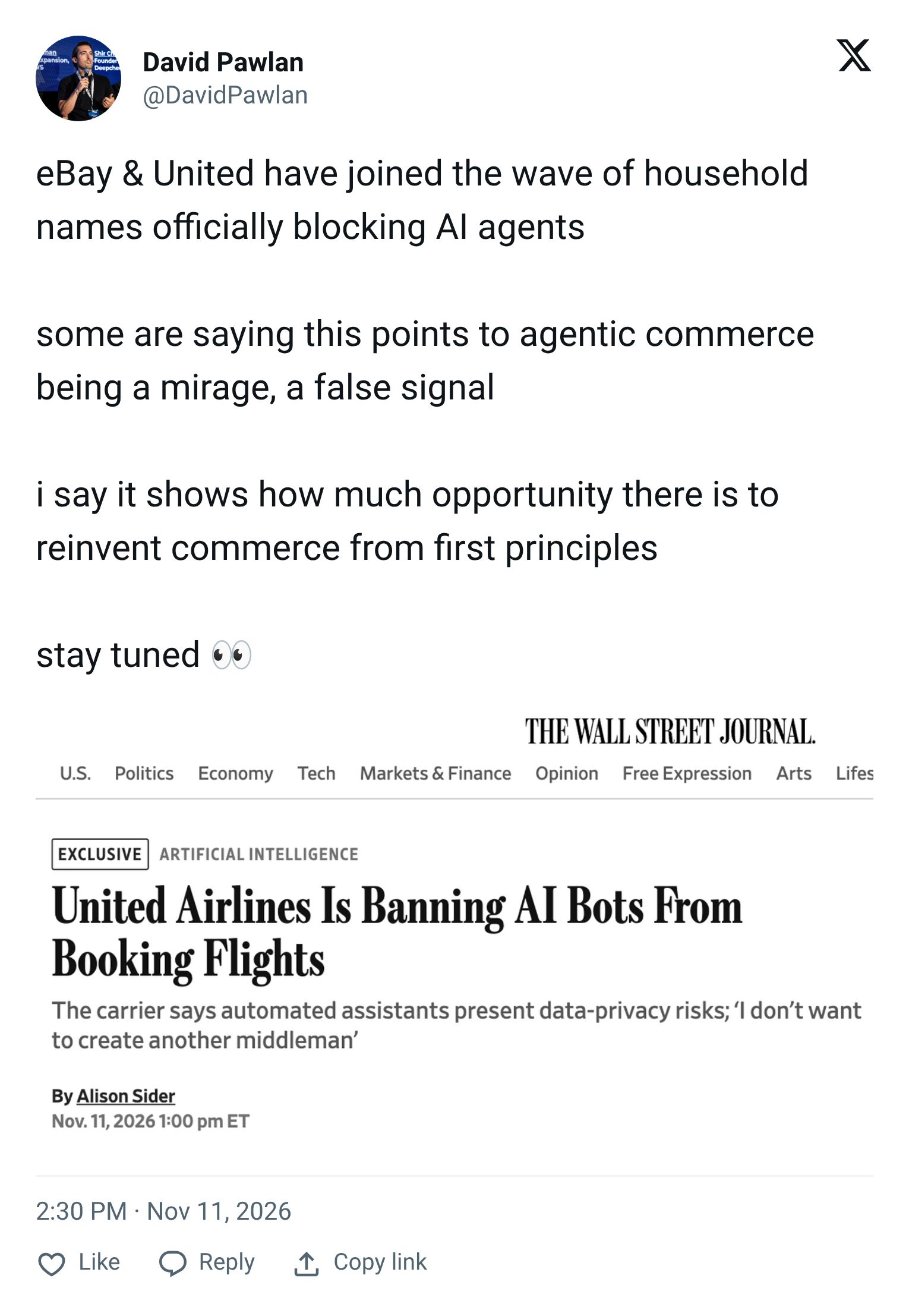
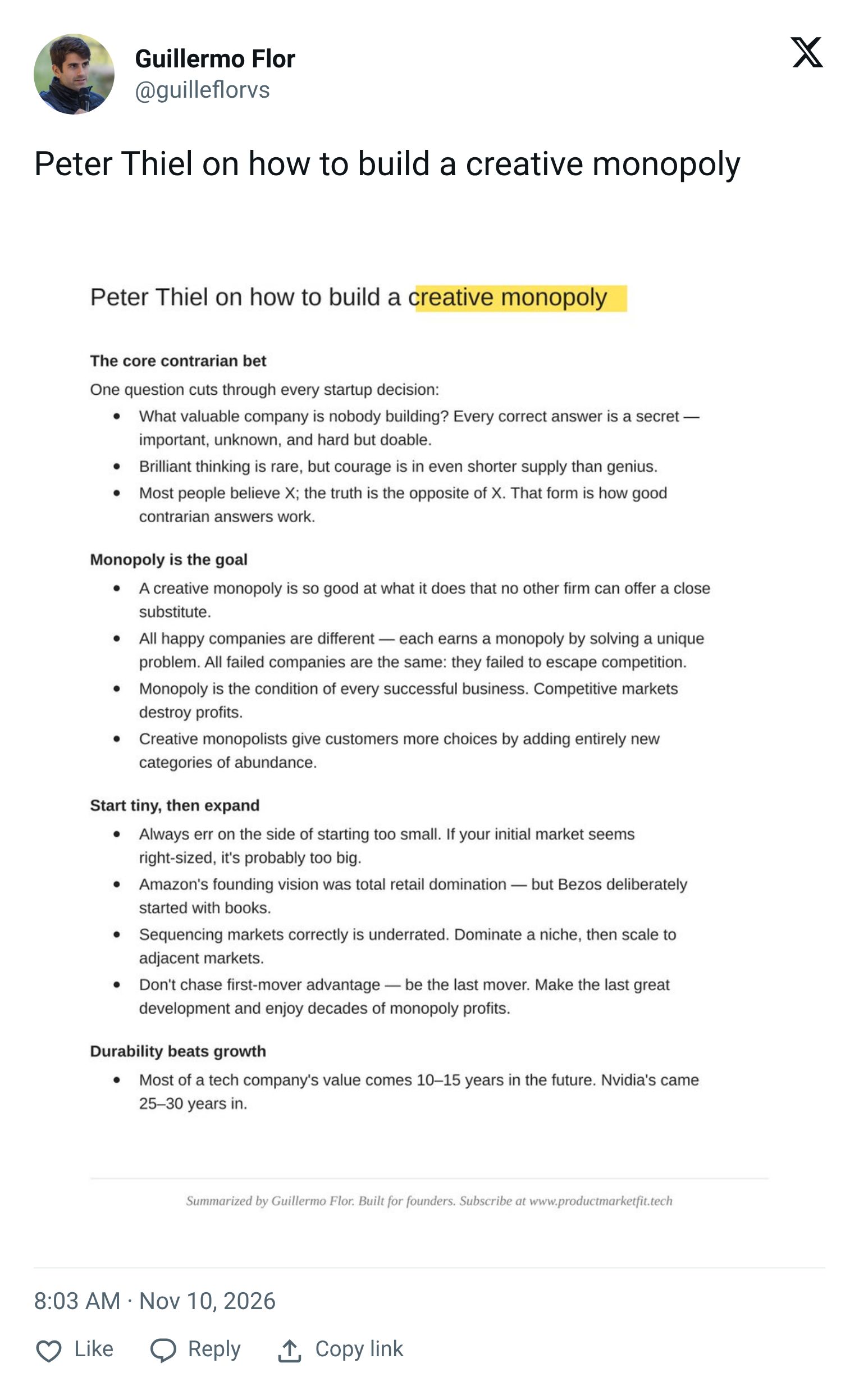
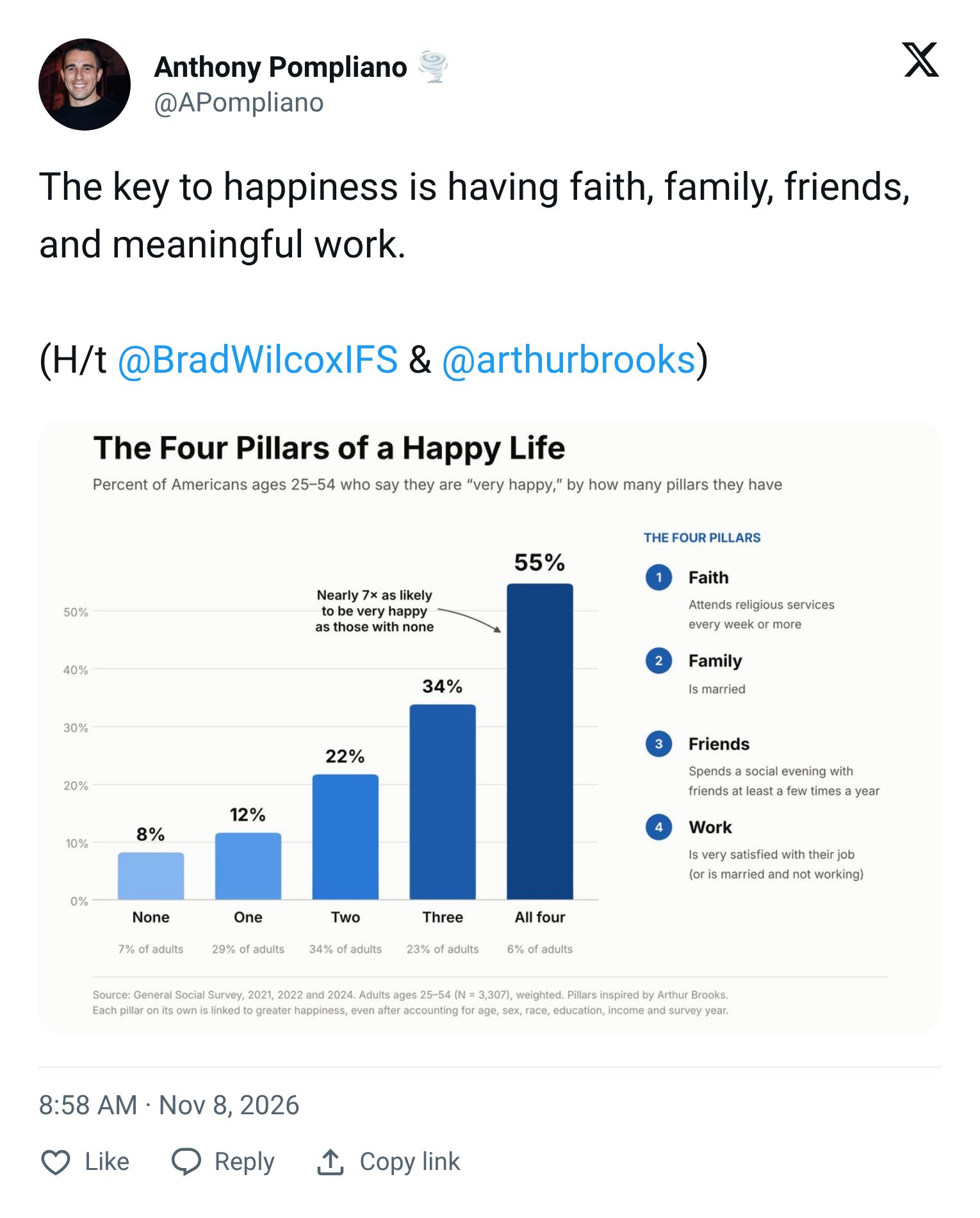
Here are the options I have for us to work together. If any of them are interesting to you - hit me up!
Sponsor this newsletter: Reach thousands of tech leaders
Upgrade your subscription: Read subscriber-only posts and get access to our community
Buy my NEW course: Buy my course on outbound sales
And that’s it from me. See you next week.

